The New Zealand Law Society has had a bad run lately. They claimed they were surprised that sexual harassment at scale was occurring in law firms and was underreported to them; they were unable to say what the public needs to hear – that the ‘Russell McVeagh lawyers’ are under investigation; and their National Standards Committee decided to expend time and resources investigating a family violence lawyer’s legitimate criticism of a judge.
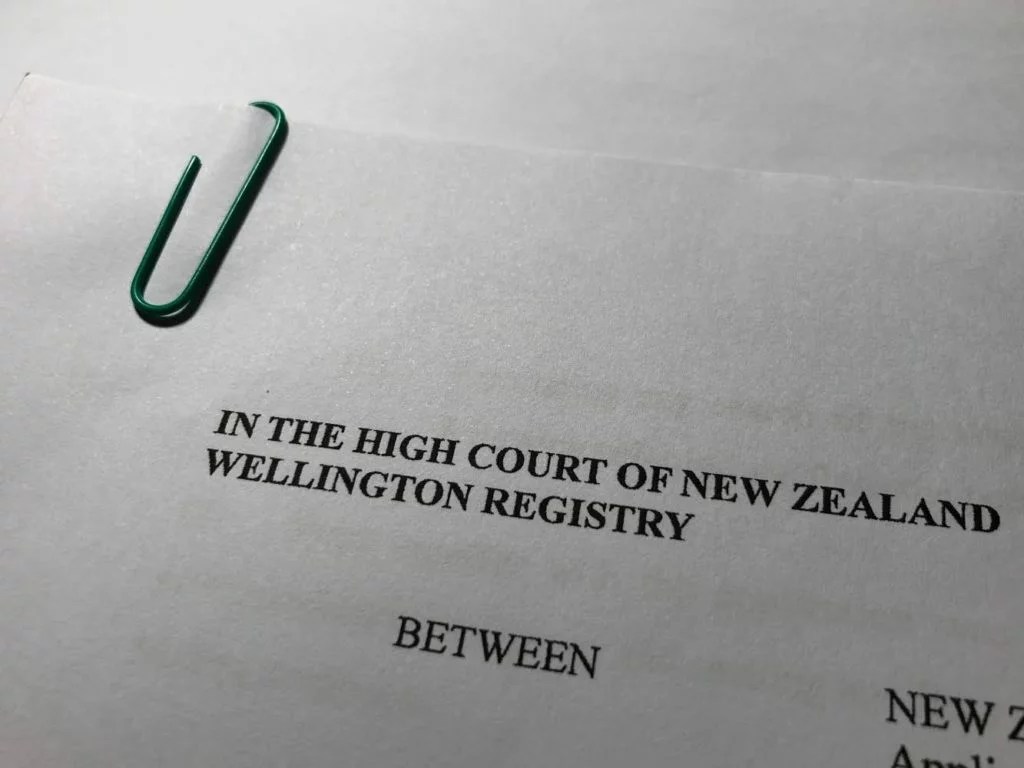
Adding to that list, four months ago the Law Society obtained a “super-injunction”, a special type of gag order, against me. On Thursday that order was modified by the High Court, which means I can disclose its existence for the first time.
Injunctions and super-injunctions
An injunction is a court order. Usually they prohibit someone from doing something, like disclosing information. A super-injunction is an injunction about the injunction. In other words, a court order prohibiting disclosing that an injunction or the related court proceedings even exist. They’re rare. In the United Kingdom, the Guardian is aware of and able to report on only 40 cases. And they’re rarer here, in humble, less litigious Aotearoa New Zealand.
Super-injunctions challenge the principle of open justice; that cases should be determined in open, not secret courts, to prevent overreach of judicial power. Super-injunctions are uncommon, they are onerous, and they are costly to apply for and to defend against. The group of people who a respondent can safely discuss a super-injunction with is tiny: their lawyer.
Super-injunctions have been the subject of considerable controversy in the UK. Lord Neuberger’s committee published a 112 page report in 2011 that was highly critical of super and other similar injunctions. The most controversial super-injunctions usually involve a powerful person or organisation trying to suppress unfavourable but true information.
The Law Society’s super-injunction
The super-injunction was served on me on 5 April 2018, but had been granted several days earlier by Justice Churchman at the Wellington High Court, without notice and under urgency.
The injunction prohibited the publication or disclosure of information accidentally emailed to me by NZLS on 21 March. The contents of that email is still subject to suppression, except for the fact that it “attached a complaint made to the plaintiff [NZLS] by a legal practitioner about his own conduct; and such conduct was alleged to amount to sexual harassment or bullying”.
The super part of the injunction was that the fact that the High Court proceedings, New Zealand Law Society v Taylor, even existed could not be published, and that the Court file could not be searched. One effect of this has been that for several weeks NZLS has been able to avoid public scrutiny of their mistake of emailing confidential information to the wrong person.
The court was persuaded by the lukewarm argument that I have “a blog (in addition to being active on other social media such as Twitter)”, and because I had not replied to emails, a text message, and voicemail from the Law Society (I was seeking legal advice). In fact, the night before the injunction was granted I sent an email to NZLS’ barrister and a senior staff member. The injunction was stated to be interim, but the case had no next appearance timetabled, so it was effectively permanent.
How did the Law Society get here?
The Law Society is a surprising applicant for a super-injunction. Not a celebrity trying to cover up an affair or someone trying to neutralise a blackmail attempt, they are the regulatory body responsible for policing the conduct of New Zealand lawyers. The Law Society submits on legislation before Select Committees calling out overreach. They even have their own Rule Of Law Committee. And ironically, during the time the super-injunction was in force, in response to criticism of their Committee’s investigation of Catriona MacLennan, they publicly denied that they suppress free speech. But they, via a partner at top-tier law firm Meredith Connell, applied for a super-injunction. Their application was urgent without notice to any other party. That means I had no knowledge that the proceedings had been commenced against me, and no one provided the judge with arguments against the super-injunction being granted before the decision was made.
NZLS continued to escalate court proceedings while I was corresponding with their lawyers, filing a statement of claim in the proceedings in response to me declining an invitation to meet with the Law Society’s president. They did this even though I had told them I had no intention of publishing the information; had deleted the information; and had been extremely careful not to disclose identifying details, even to my own lawyers. By the time we settled proceedings they had involved a barrister, a partner, a solicitor, a Queen’s Counsel, and a junior barrister.
In contrast to not being prepared to pay the lawyers who volunteer on their “workplace culture” group, the NZLS has spent several thousand dollars on this case, including reimbursing my legal costs as part of our settlement.
Secrecy
Lawyers subject to sexual misconduct are afraid of speaking out, fearing their careers, more likely to leave a firm than be the “squeaky wheel”. Perhaps Human Resources find out about an “incident”, but they’re conflicted as their staff are employed by the partnership of which the harasser is commonly a member of. The wider partnership might find out too, but they’re conflicted as well if their business partner is the person at the centre of serious allegations, more content to accept assurances that “it won’t happen again”. Rarely, it seems, is that the case.
If a complaint makes it to the Law Society, although many lawyers seem intent on ignoring their compulsory reporting obligations under their rules, that is secret too. There is no visibility that complaints are even being made or investigated. There is no default opportunity for other victims to become aware of a complaint or investigation and indicate that a practitioner is a serial abuser. The Law Society appears to be fine with this secrecy, confident that it was Parliament’s intention. They don’t think anything substantive needs to change.
Even for a complaint that ends up being upheld, the only time proceedings are public by default is if the matter is so serious that it is referred to the Disciplinary Tribunal by a Standards Committee. If a Standards Committee finds unsatisfactory conduct they can order the publication of the practitioner’s name, but this is after the interests of wide group of people are considered, and publication is signed off by the NZLS board. The interests considered include those of: the complainant; clients of the practitioner; relatives of the practitioner; partners, employees and associates of the practitioner; and the practitioner.
By 30 June all lawyers in New Zealand intending to continue practising law needed to have renewed their practising certificate. It’s an annual task, and probably one most lawyers do on autopilot, declaring they are of good enough character to remain a lawyer.
Several lawyers who are facing credible allegations of sexual harassment still retain their practising certificates.
Will anything change in the legal profession? Sunlight is said to be the best of disinfectants, but at the moment it seems the Law Society is content with sexual misconduct reported to them staying behind closed doors.
